

Water Quality Monitoring Sheds Light on Unique Southern Inshore Zone
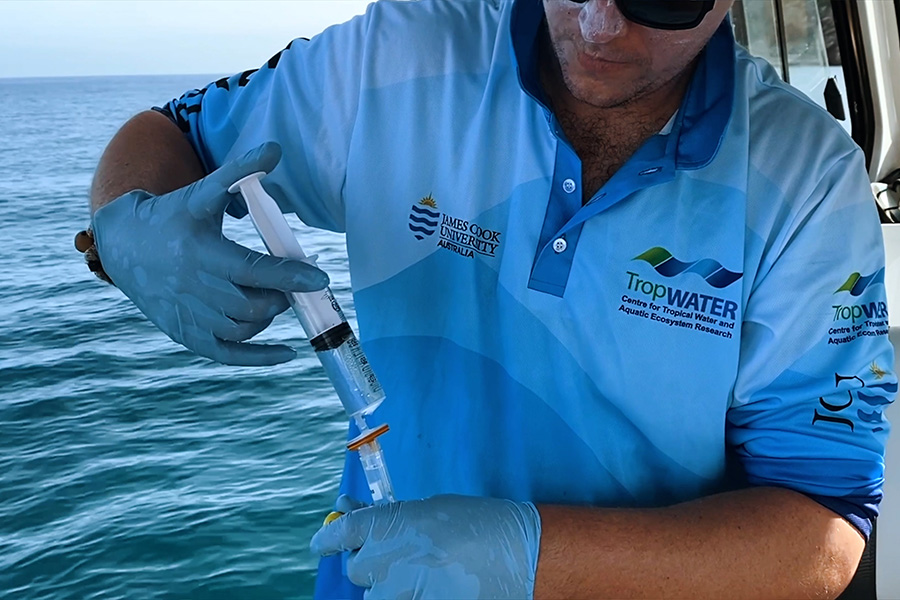
A new report released as part of the Southern Inshore Monitoring Program provides the latest insights into water quality conditions along the Isaac coastline.
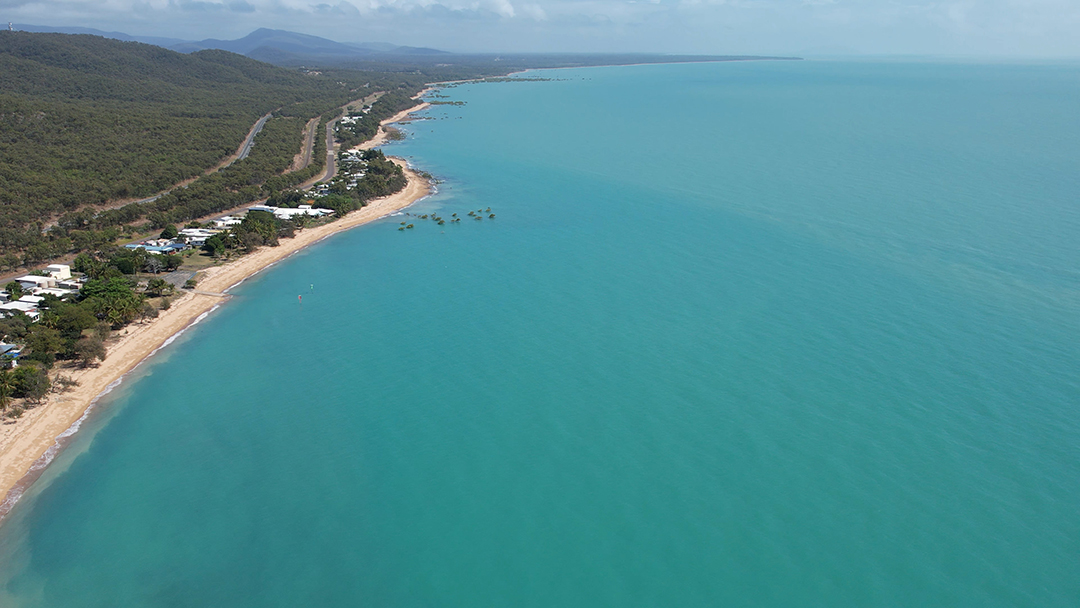
The report focuses on the Mackay-Whitsunday-Isaac’s unique Southern Inshore Zone, helping build long-term understanding of marine ecosystem health in the waters south of Mackay, near Clairview.
Prepared by James Cook University’s Centre for Tropical Water and Aquatic Ecosystems Research (TropWATER), the Southern Inshore Program Water Quality Report for 2024–2025 presents findings from ongoing monitoring of marine water quality indicators including nutrients, sediments, chlorophyll-a and pesticides.
TropWATER Senior Research Scientist Dr Paula Cartwright said the program was particularly important due to the unique characteristics of the region, and a lack of prior research undertaken in the area.
“What I really like about the Southern Inshore Program is that it collects data on a region that has had little previous research done. It’s a really unique area and it’s great for us to understand what is happening in that ecosystem,” Dr Cartwright said.
“The Southern Inshore Zone is affected by Broadsound which is the largest tidal region on the east coast of Australia, so you get these massive tidal currents ripping through and it really affects the water quality. Yet, despite these turbid conditions, the coral reefs and seagrass beds in the area are really thriving and healthy.”
~ Senior Research Scientist Dr Paula Cartwright, JCU TropWATER
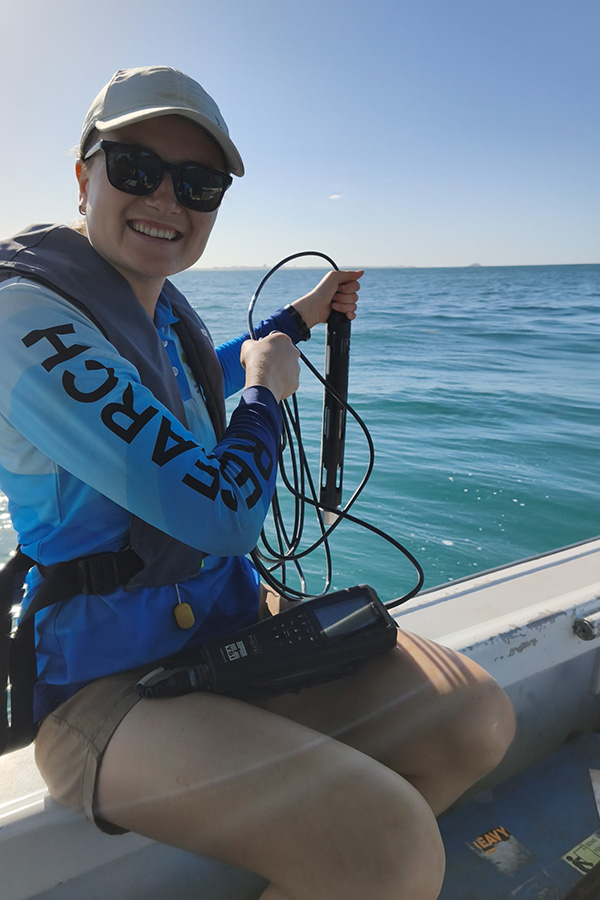
As part of the monitoring, Dr Cartwright’s field team collect grab samples of water every eight weeks, combined with continuous data loggers on the seabed, collecting data on water clarity and light every ten seconds throughout the year.
The extensive dataset helps provide a clearer picture of marine conditions and helps inform future management actions.
“There has been a lot of resources that have gone into improving catchment to reef processes and without monitoring water quality in receiving environments, we can’t tell if we’re really making a change or if we need to tweak those improvement programs,” Dr Cartwright said.
Healthy Rivers to Reef Executive Officer Jaime Newborn said monitoring of the Southern Inshore Zone was building a clearer picture of ecosystem health and environmental change over time.
“Each year of monitoring through the Southern Inshore Program adds another important piece to the puzzle, helping us better understand how these coastal ecosystems respond to changing environmental conditions,” Ms Newborn said.
“By collecting long-term data and involving our community, we can make better-informed decisions to help protect and manage this beautiful region into the future.
“We are extremely proud of the Southern Inshore Program and the ongoing commitment from our funders, Dalrymple Bay Coal Terminal Pty Ltd (DBCT P/L) and Dalrymple Bay Infrastructure to help protect and manage our local waterways.”
Ricci Churchill, DBCT P/L Manager of Safety, Risk and Environment, said long-term monitoring helped communities access trusted local environmental information.
“We believe it’s important to keep monitoring – to build that robust dataset – so that the community and decision makers have access to the information they need to make decisions about the environment in their local area,” she said.
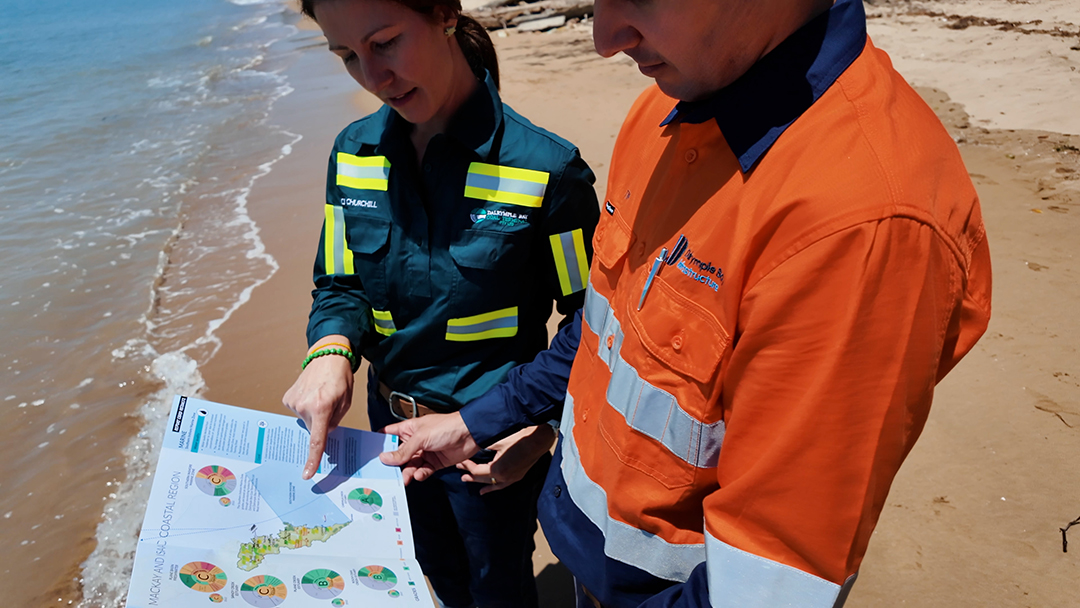
Read the Southern Inshore Program Water Quality Report in full.
Key points
- The Southern Inshore Monitoring Program collects data on coral, seagrass and water quality for inshore waters off the coast of Clairview.
- The program was established to fill a key data gap in the Southern Inshore Marine Zone, along the Isaac region’s coastline.
- The data is presented in our annual Waterway Health Report Card.
- The Southern Inshore Monitoring Program is funded by Dalrymple Bay Coal Terminal Pty Ltd and Dalrymple Bay Infrastructure.
- Water quality conditions during the 2024–2025 monitoring period generally remained within expected seasonal ranges for an inshore Great Barrier Reef environment.
- Wet season rainfall events resulted in short-term increases in suspended sediments and nutrient concentrations, reflecting the strong influence of seasonal weather patterns on coastal water quality.
- Monitoring also recorded generally low chlorophyll-a concentrations, indicating low phytoplankton biomass throughout much of the year.
- Pesticides were detected intermittently following wet season runoff events, however concentrations remained below relevant guideline values during the monitoring period.